

To prepare a yacht for an ocean crossing properly requires a very different approach from preparing it for a normal coastal passage. Offshore, small problems can quickly become serious ones, and there may be no marina, technician or spare part available for hundreds of miles.
After more than 170,000 nautical miles and five Atlantic crossings aboard sailing yachts, catamarans and motor yachts, I have learned that a successful ocean passage usually begins long before leaving the dock.
The objective is not simply to make sure the yacht can cross an ocean. It is to identify weaknesses, create redundancy where it matters and prepare the yacht so that both vessel and crew can deal with problems safely when they inevitably arise.
1. Safety First: Is the Yacht Ready for an Ocean Crossing?
Before thinking about weather windows, provisioning or departure dates, I want to know that the yacht is fundamentally safe. For an ocean crossing, safety equipment should never be treated as a box-ticking exercise. Every system must be checked, accessible and, where appropriate, tested before leaving the dock.
I start with the essential emergency equipment: liferafts, EPIRB, lifejackets, personal AIS/MOB devices, flares, grab bag, first-aid kit and emergency communications. Service dates, batteries and registrations should be checked, but accessibility is equally important. Emergency equipment buried at the bottom of a locker is of little use when seconds matter.
Fire protection deserves the same attention. Fire extinguishers, fire blankets and smoke or CO detectors should be inspected and tested where applicable. The crew must know the location of fuel shut-off valves, battery master switches and any emergency engine or generator stops. Gas installations and shut-off valves should also be checked before departure.
I also inspect seacocks and through-hull fittings, bilge pumps, float switches and high-water alarms. Manual bilge pumps must be accessible, and wooden plugs or other basic damage-control materials should be kept close to the relevant through-hulls rather than hidden somewhere onboard.
Emergency steering must be accessible and ready for use, not simply listed in the yacht’s inventory. Navigation lights, emergency lighting and independent means of communication should also be verified.
Anchoring equipment should also be considered part of the yacht’s emergency capability. A second anchor is only useful if it can actually be deployed when needed, with suitable chain or rode, shackles and a practical method of deployment if the primary windlass or anchoring system becomes unavailable.
Where practical, emergency steering and alternative anchoring arrangements should not only be inspected — they should be physically tested before departure.
Most importantly, it is not enough for the captain to know where everything is. Every crew member should be shown the location of the yacht’s critical safety equipment before departure. In the next section, we will go one step further: they should also know how to use it.
My rule is simple: before preparing a yacht to cross an ocean, first make sure that the yacht can protect the people aboard when something goes wrong.
2. Crew Briefing, Experience and Emergency Drills
Before departure, I want to know the experience and capabilities of every person onboard. Ocean passages are not the place to discover that somebody does not know how to steer the yacht, use the VHF or stop an engine.
Every crew member should receive a proper safety briefing and know how to engage and disengage the autopilot, take manual control of the yacht, mark a MOB position, locate and activate the EPIRB, use the VHF and understand how to transmit a MAYDAY or PAN-PAN.
They should also know how to start and stop the engines, where the fuel shut-off valves and battery master switches are located, where to find the liferafts, lifejackets, fire extinguishers, grab bag and first-aid kit, and how the emergency steering system works.
Before an ocean crossing, I also want to know each crew member’s sailing experience, medical conditions relevant to the passage, allergies, regular medication and any limitations that could affect watches or emergency duties. Responsibilities and a second-in-command should be established before departure.
The watch system should reflect experience rather than simply dividing the hours equally. Less experienced crew should not be placed in situations beyond their ability, particularly at night or in difficult conditions.
Fatigue must also be managed from the beginning of the passage. Watch schedules should allow adequate rest, particularly during the first days while the crew adapts to life at sea. Hydration, regular food and sufficient sleep directly affect judgement and reaction time, so I consider them part of safe watchkeeping rather than simply crew comfort.
Everyone must also understand one very simple rule:
If in doubt, call the captain.
Whenever practical, I believe in practising rather than simply explaining. A fire drill and MOB drill before departure can immediately reveal whether the crew actually knows what to do. Abandon-ship procedures should also be discussed so everyone understands their role if the situation ever becomes serious enough to require it.
3. Passage Plan, Weather and Alternatives
An ocean passage begins with a realistic passage plan, not simply a destination entered into the chartplotter.
I review the intended route, seasonal weather patterns, currents, navigational hazards, expected passage time and available weather-routing information. Forecasts should be obtained from more than one reliable source whenever possible, particularly before committing to a departure window.
Alternative plans are equally important. I want to know where the yacht can divert if there is a medical problem, serious technical failure or unexpected change in weather. Ports of refuge, approaches, depths and practical limitations should be considered before they are needed.
The passage plan also determines many other decisions: fuel requirements, water, food, watchkeeping and the quantity of reserves carried onboard. Planning for a ten-day passage as though it will always take exactly ten days leaves very little room for reality.
A responsible person ashore should also have the yacht’s intended route, crew details and expected arrival information.
Documentation should be checked with the same care as the passage plan. Passports, visas where required, yacht registration, insurance, crew documents, radio licences, EPIRB registration and any departure or arrival formalities should be verified before leaving. Health and entry requirements for the destination and any potential contingency ports should also be checked in advance, including any vaccinations or vaccination certificates that may be required. Copies of essential documents should be kept securely onboard and, where practical, available offline.
A passage plan should tell us not only how we intend to reach the destination, but what our options are when the original plan stops working.
4. Fuel, Water, Food and Medical Preparation
Once the route and expected passage duration are established, I calculate the resources required onboard — and always include a realistic safety margin.
For drinking water, my normal planning figure is approximately 3 to 3.5 litres per crew member per day, before allowing for water required for cooking and other uses. I then add a reserve for delays or unexpected circumstances.
A watermaker provides excellent autonomy, but I do not consider it a replacement for adequate freshwater reserves. Drinking water should ideally not depend entirely on one tank or one system. A contaminated tank, failed pump or watermaker problem should not immediately become an emergency.
Fuel calculations should be based on the yacht’s real consumption, not simply figures from a brochure. I consider propulsion, generator use, battery charging, manoeuvring and other fuel-dependent systems, then add an appropriate reserve for the route and circumstances.
Provisioning follows the same philosophy. Food is calculated according to crew numbers and expected passage duration, with additional reserves for delays. There should always be food onboard that can be prepared easily in bad weather and some that can be eaten without cooking if the galley cannot safely be used.
Medical preparation starts with the people, not the first-aid kit. Before departure, I want to know about allergies, regular medication and relevant medical conditions among the crew. Prescription medication should be sufficient for the expected passage plus an appropriate margin.
The first-aid kit must then be checked against the number of people onboard, duration of the voyage and distance from professional medical assistance.
5. Provisioning and Stowage: Small Details Matter Offshore
Buying enough food is only half the job. Where and how it is stored can make an enormous difference offshore.
Heavy provisions should be stored low and properly secured. Nothing should become a projectile when the yacht starts moving violently, and frequently used items should remain accessible without having to empty half a locker during a night watch.
I prefer to organise provisions according to when they will be needed. Food for the first days and everyday items remain easily accessible, while longer-term reserves can be stored deeper in the yacht.
Fresh fruit and vegetables should be organised according to their expected life and ripening. They need to be inspected regularly, and damaged or spoiled produce removed immediately before it affects the rest.
Dry foods must be protected from moisture and pests. Not everything should be stored together, and I avoid concentrating all essential provisions in one place when practical.
Refrigeration and freezing are useful, but an ocean-going yacht should not become dependent on them. There should always be sufficient food that remains usable if refrigeration fails.
I also reduce unnecessary packaging where appropriate, label provisions clearly and keep an inventory of what is onboard and where it is stored. Waste management must be considered before departure as well — weeks of packaging and rubbish require space and proper organisation.
Finally, easily accessible drinks, snacks and simple meals for difficult conditions help the crew remain hydrated and effective when nobody wants to spend an hour in the galley.
6. Steering, Rigging, Engines and Sail Handling
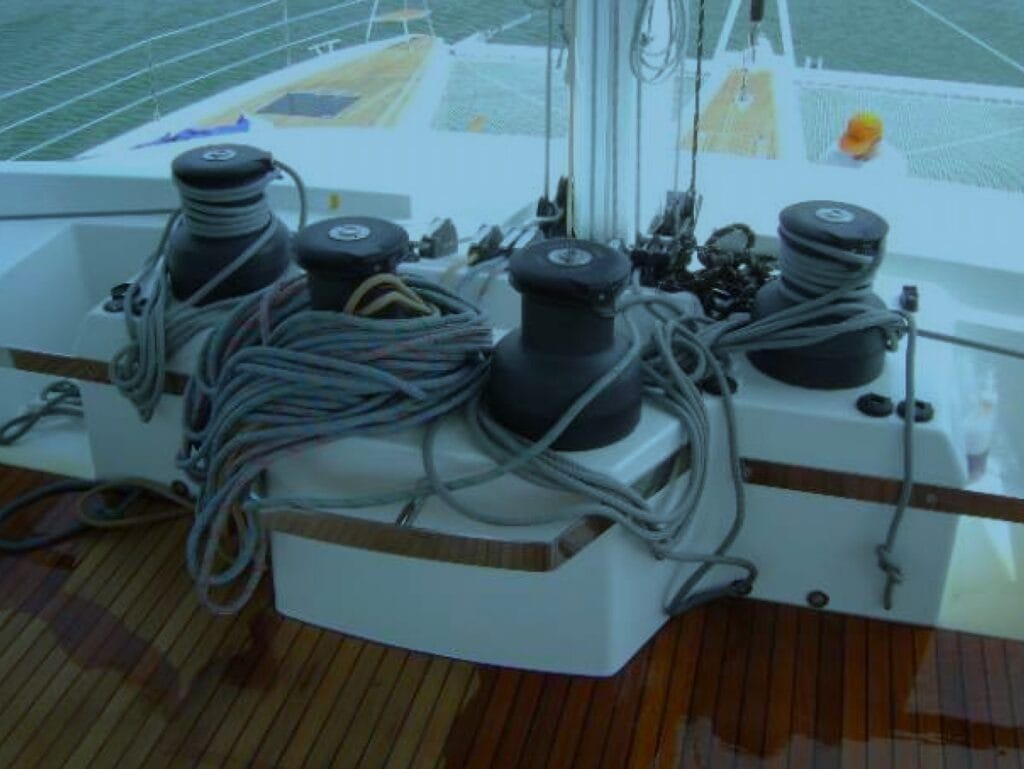
The systems that keep the yacht moving and under control deserve a complete inspection before an ocean passage.
On sailing yachts, I inspect standing and running rigging, halyards, sheets, furling systems, blocks, winches, tracks and reefing arrangements. Heavy-weather sails and reefing systems should be prepared and tested before departure rather than discovered for the first time when conditions deteriorate.
The autopilot deserves particular attention because few systems work for as many continuous hours offshore. I do not consider a second control display to be genuine redundancy. The complete chain matters: heading sensor, computer, drive unit, electrical supply and mechanical steering.
The crew must also know how to disengage the autopilot immediately and steer manually. Emergency steering should be accessible, understood and, whenever practical, tested.
Engines require more than an oil-level check. Cooling systems, seawater intakes, strainers, impellers, belts, hoses, filters, exhaust systems, starting batteries and fluid levels should all be inspected.
Accessibility matters too. Offshore, being able to reach a blocked strainer, replace an impeller or change a fuel filter quickly can be as important as having the spare part onboard.
On a twin-engine yacht or catamaran, two engines only provide true redundancy when a common failure cannot disable both. Fuel supply, electrical controls and other shared systems therefore deserve particular attention.
7. Electrical Power, Navigation and Communications
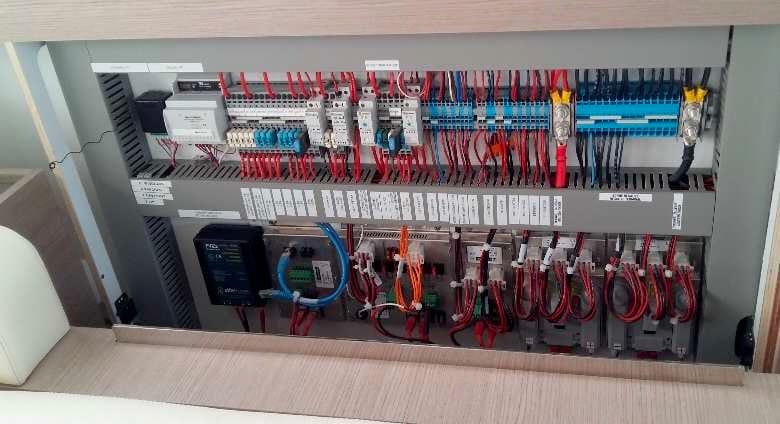
Modern yachts are heavily dependent on electricity. Autopilot, navigation, communications, pumps, refrigeration, water production and many safety systems all depend upon reliable power.
I look at the complete energy system: batteries, alternators, generators, solar panels, chargers, inverters and distribution. Having several charging sources does not automatically create redundancy if they all depend on the same critical component.
Starting batteries should remain protected from domestic consumption, and essential equipment should, wherever practical, have an alternative source of power.
Navigation should follow the same philosophy. Several displays connected to the same GPS antenna, network or electrical supply are not several independent navigation systems.
Radar, AIS, depth information, visual observation and independent position sources provide different layers of information. A handheld or otherwise independent GPS can remain extremely valuable when the main navigation network fails.
The same applies to communications. Fixed VHF, waterproof handheld VHF and satellite communications each have different strengths.
Systems such as Starlink have transformed offshore communications and access to weather information, but internet connectivity should never replace dedicated marine emergency communications.
The objective is simple: losing one electrical, navigation or communication system should not leave the yacht blind, silent or without essential equipment.
8. Redundancy, Bilge Systems and Critical Spares
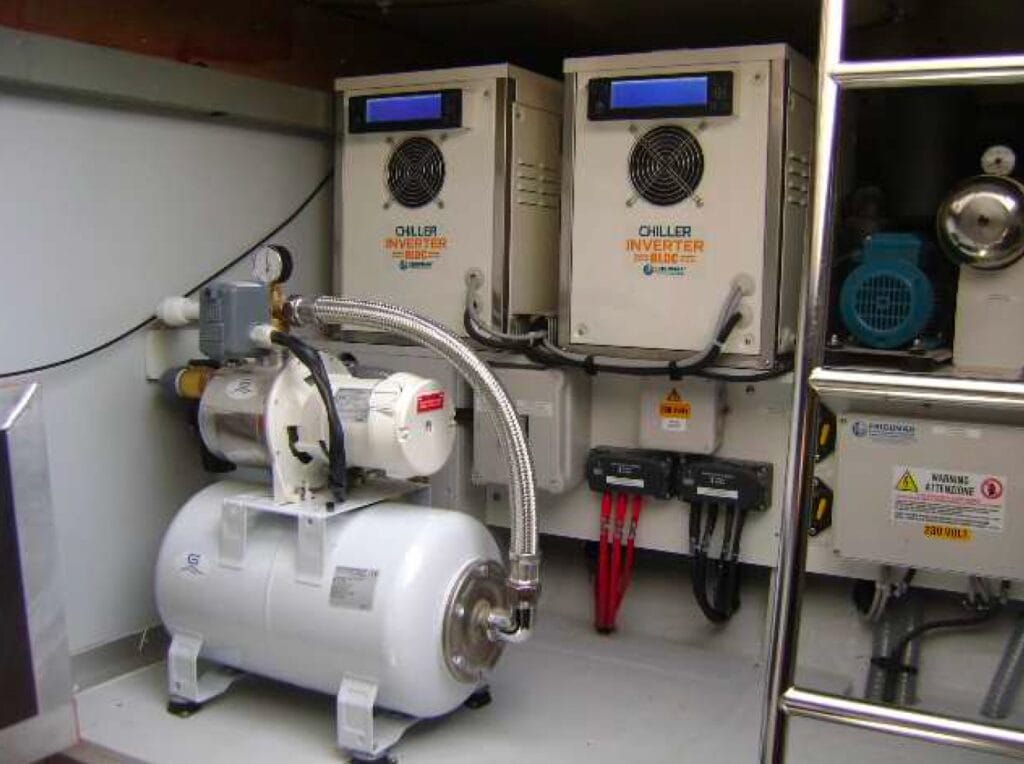
For me, redundancy means more than carrying two of something. True redundancy means preserving another option when the primary system fails.
This principle applies throughout the yacht: steering, autopilot, electrical generation, navigation, communications, fuel, freshwater and bilge systems.
This is particularly important aboard catamarans and yachts with complex integrated systems. Two engines, two navigation displays or two pumps may appear to provide redundancy, but if they share the same electrical supply, fuel source, network, sensor or control system, one common failure can disable both. Before departure, I try to identify these single points of failure and determine what independent alternative remains available.
Fuel and water tanks should be understood and, where possible, capable of being isolated. Two tanks provide little protection if contamination or a plumbing failure can affect both.
Water ingress deserves particular attention. Electric bilge pumps, float switches and high-water alarms should be tested before departure. Manual pumps must remain accessible, and the crew should know where seacocks and through-hull fittings are located.
Wooden plugs, sealing materials and damage-control equipment should be immediately available. A portable high-capacity pump with sufficient hose and cable can provide another useful layer of protection.
Critical spares should be selected according to the yacht and the consequences of failure. Typical items may include impellers, belts, filters, pumps, relays, fuses, hoses, clamps, electrical connectors and selected autopilot components.
The yacht should also carry the tools required to perform the repairs that can reasonably be expected offshore. Technical manuals, electrical diagrams, fuel and water schematics, equipment references and important troubleshooting information should be downloaded and available offline rather than depending entirely on an internet connection.
But carrying the spare is not enough.
A spare part is only truly useful offshore if the crew has the tools, knowledge and access required to install it.
For that reason, I prefer a carefully planned inventory of critical spares over lockers full of equipment nobody can identify or use.
9. Sea Trial: Test Everything Before You Leave
A yacht should not begin an ocean crossing immediately after major maintenance, a refit or significant technical modifications whenever this can reasonably be avoided.
I want to take the yacht to sea first and operate its systems under realistic conditions.
Engines, steering, autopilot, navigation, communications, sail handling, electrical generation, battery charging and water production should all be exercised. The objective is not simply to see whether something switches on.
I look for temperatures, vibration, leaks, unusual noises, electrical consumption, charging performance and how equipment behaves after operating continuously and under load.
The crew also benefits from this trial. It provides an opportunity to become familiar with the yacht, practise manoeuvres and discover practical problems while returning to port is still easy.
After significant work, my approach is:
Test. Inspect. Correct. Test again.
A problem discovered twenty miles from the marina is inconvenient. The same problem discovered a thousand miles offshore can become a serious situation.
An ocean-ready yacht is not one on which everything worked at the dock. It is one whose critical systems have been tested at sea.
10. The Captain’s Final Checklist to Prepare a Yacht for an Ocean Crossing
Before departure, I make one final review of the yacht, crew and passage plan.
- Safety equipment checked, serviced and accessible
- EPIRB, liferafts, lifejackets and MOB equipment ready
- Fire protection, detectors and emergency shut-offs checked
- Crew briefing completed and responsibilities understood
- Fire and MOB procedures practised
- Watch system agreed and second-in-command identified
- Weather window, route and alternatives reviewed
- Passports, yacht documents, insurance, entry requirements and health documentation checked
- Fuel calculation completed with appropriate reserve
- Drinking water calculated for crew, passage duration and contingency
- Food and medical supplies checked with additional reserve
- Engines, steering and autopilot tested
- Rigging, sails and reefing systems checked
- Electrical generation and batteries tested
- Navigation and independent backup available
- Communications and emergency communications tested
- Bilge pumps and high-water alarms operational
- Emergency steering understood and accessible
- Primary and alternative anchoring arrangements checked and ready
- Critical spare parts and correct tools onboard
- Yacht sea-trialled after significant technical work
- Shore contact has passage and crew information
An ocean crossing will always involve uncertainty. Preparation cannot eliminate every possible failure.
What it can do is reduce unnecessary risks, identify weaknesses before departure and preserve enough options for the yacht and crew to deal with the unexpected.
That, after more than 170,000 nautical miles and five Atlantic crossings, is what I mean when I say a yacht is ready for an ocean.
Preparing for an Ocean Passage?
Every yacht and every ocean passage is different. If you are preparing a yacht for a long-distance voyage, Atlantic crossing or offshore delivery, I can help assess the vessel, identify potential weaknesses and prepare the yacht before departure.